TL;DR
- Optimizely posted an incident notice at 01:02 UTC on Tuesday, November 17. An attacker exploited a flaw in the Experimentation account signup flow and added malicious JavaScript to some customer projects.
- Report URI found the code in 188 of 1,611 scripts it checked, belonging to 178 organizations, including HSBC, the BBC, and Zoom.
- The code swapped cryptocurrency wallet addresses and skimmed card details from a site's own payment forms. Hosted payment frames were out of its reach.
- Optimizely says it has fixed the vulnerability, removed the injected code, and notified affected customers.
- Site owners should check their Optimizely Project JavaScript, keep third-party tags off checkout pages, and inventory the scripts their sites load.
Optimizely posted an incident notice at 01:02 UTC on Tuesday, November 17. The company told BleepingComputer that an attacker exploited a vulnerability in the Experimentation account signup flow. The attacker used it to add malicious JavaScript to some customer projects. Many websites load an Optimizely script to test page changes.
Scott Helme of Report URI found the injected code in 188 of 1,611 Optimizely scripts his team checked. Those files belonged to 178 organizations, including HSBC, the BBC, and Zoom. Report URI says the true number is likely higher. BleepingComputer independently confirmed the malicious script on several of the affected sites.
The code was written into an optional field called Project JavaScript, which runs on every page that loads the snippet. The files were still served from Optimizely's own content network with Optimizely's certificate, which visitors' browsers already trusted. A website can serve this kind of code without its own servers being breached.
The payload swapped cryptocurrency wallet addresses for the attacker's addresses in page text, forms, links, and the clipboard. A card skimmer was added at 13:43 UTC on Monday, November 16. It captured card numbers, expiry dates, and security codes from a site's own form fields. It could not read cards entered in a payment provider's hosted frame, such as Stripe or Adyen fields.
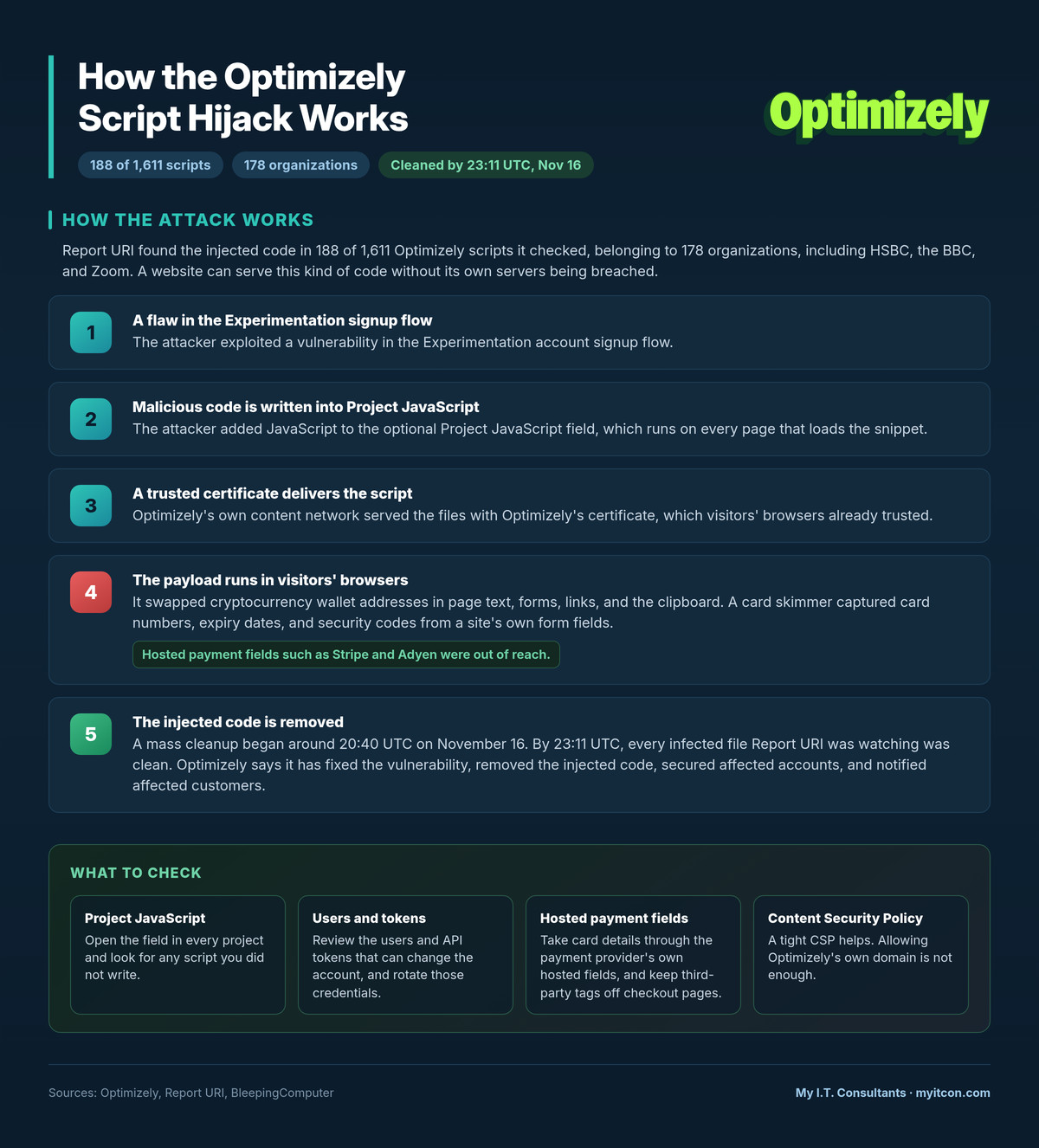
The first injection Report URI saw was at 04:21 UTC on Monday, in the BBC's script. A mass cleanup began around 20:40 UTC. By 23:11 UTC, every infected file the firm was watching was clean. Optimizely says it has fixed the vulnerability. It removed the injected code, secured affected accounts, and notified all affected customers.
Report URI says cryptocurrency has already been stolen, with verified transactions to wallets listed in the payload. Some of those wallets were already in use before Monday. The firm cannot see how many card numbers reached the attacker.
If your business uses Optimizely Web Experimentation, open the Project JavaScript field in every project. Look for any script you did not write. Review the users and API tokens that can change your account. Rotate those credentials. Keep third-party tags off checkout pages wherever you can. Take card details through your payment provider's own hosted fields. A tight Content Security Policy helps. Allowing Optimizely's own domain is not enough.
Anyone who entered a card on an affected site on Monday should watch their statements. Anyone who sent cryptocurrency that day should compare the destination with the address they meant to pay.
Trusted third-party scripts can change without a change to your own site. A short inventory of the scripts your pages load is a practical place to start.
Athens businesses can ask veteran-owned My I.T. Consultants for a Free Assessment. As a Microsoft-certified MSP, we can review the third-party scripts on your website with you. Call 903-675-5431. Our office hours for hourly work are Monday through Friday from 7:00 a.m. to 6:00 p.m. Contract customers can reach us 24/7.
Want help with this at your business? See Cybersecurity on our Services page or contact My I.T. Consultants.
Image: My I.T. Consultants, with the official Optimizely logo identifying the vendor in the story.